
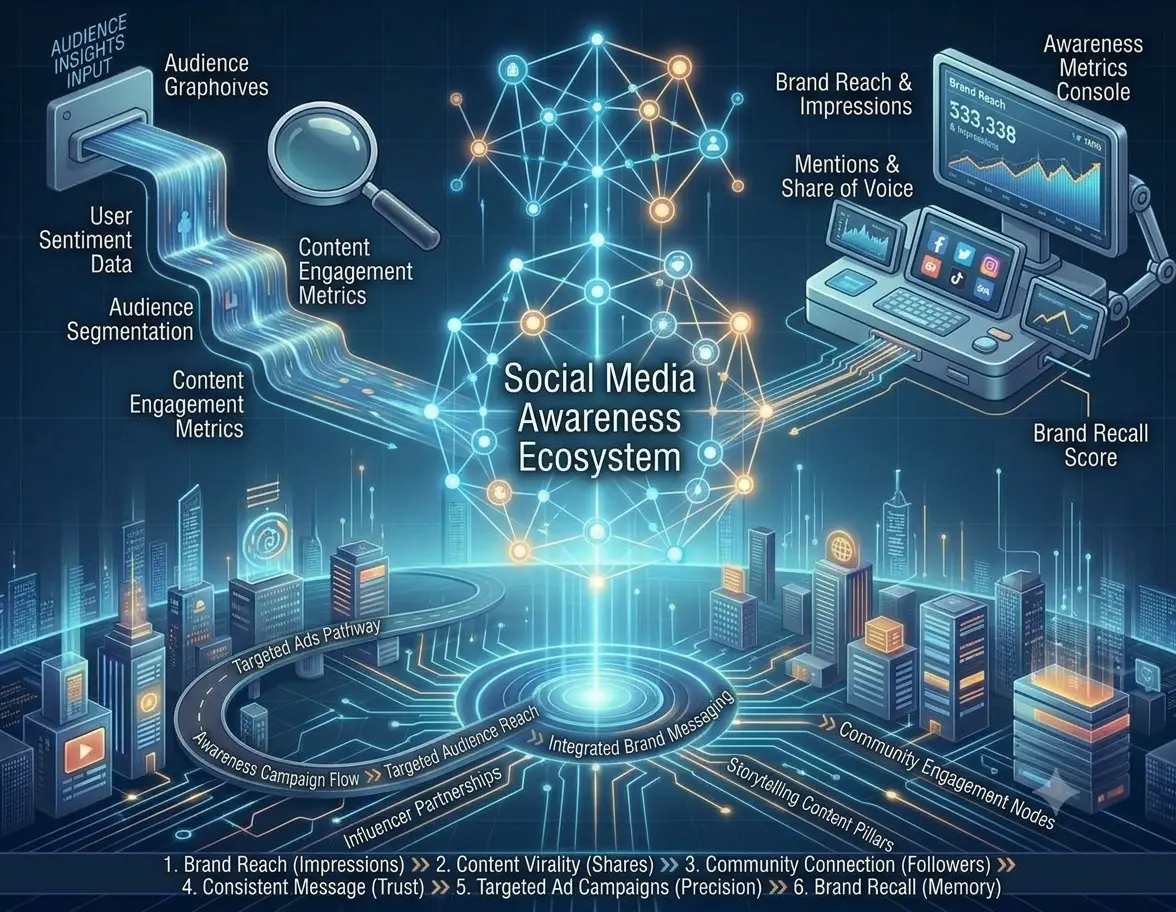
Brand awareness is not simply about getting more followers. It is about making your business recognizable, memorable, and relevant when customers are ready to consider a product or service. Social media provides businesses with a practical way to build that recognition through consistent communication, useful content, visual storytelling, and direct interaction.
A well-planned social strategy can help a company introduce its brand to new audiences while strengthening relationships with existing customers. From LinkedIn and Instagram to Facebook and other relevant platforms, businesses can communicate their expertise without relying entirely on traditional advertising.
At Trivlogic, social media is treated as part of a broader digital strategy rather than an isolated marketing activity. Effective Social Media Marketing Services can work alongside content marketing services, search optimization, paid campaigns, and branding services to create a consistent presence across digital channels. The objective is straightforward: put the right message in front of the right audience often enough to build familiarity and trust.
People are more likely to remember businesses that communicate consistently. A recognizable visual style, tone of voice, content format, and messaging can make a company easier to identify across different platforms.
Social media gives brands frequent opportunities to reinforce these elements.
Useful practices include:
Consistency does not mean repeating the same post every Tuesday like a robot with a calendar. It means maintaining a recognizable identity while presenting fresh information.
For example, a technology company can regularly share industry insights, customer experiences, product knowledge, and practical tips. Over time, users begin associating that type of information with the brand.
One major advantage of social media is its ability to extend content beyond existing followers. Useful, entertaining, or informative posts can be shared, commented on, or recommended to people who have never interacted with the company.
This makes content quality particularly important.
A strong social media content strategy can include:
Content marketing services can support this process by developing content around the questions and interests of potential customers. Instead of constantly saying “buy our service,” brands can provide information that demonstrates knowledge and usefulness.
That approach creates a more natural path from awareness to consideration.
Brand awareness becomes more valuable when people associate a business with credibility. Social media allows companies to show the people, knowledge, and thinking behind the brand.
Responding to comments, answering questions, acknowledging feedback, and participating in relevant conversations can make a business appear more accessible.
Businesses can use social platforms to:
These interactions also provide useful market insights. Comments and questions often reveal what customers actually want to know, which can influence future content and marketing decisions.
Organic reach is useful, but paid promotion can help businesses place important content in front of specific audience groups.
PPC advertising services can complement social media campaigns by supporting targeted promotional activity based on factors such as location, interests, demographics, and online behaviour, depending on the advertising platform.
For example, a company launching a new service might first publish educational content organically. Strong-performing content can then be adapted into a paid campaign to reach a broader but relevant audience.
The important point is coordination. Paid advertising should not operate separately from the brand's organic communication. When both use consistent messaging and visuals, customers receive a clearer impression of the business.
Social media should not exist in a separate marketing box. Brand awareness can become stronger when social content supports other digital channels.
A business may discover that a particular question performs well on social media. That insight can then inspire a website article, FAQ page, video, or search-focused content.
This is where digital marketing services in Kerala can provide a broader strategic approach by connecting social media, content, search, paid advertising, and website activity.
Search visibility also contributes to brand recognition. When users repeatedly encounter a business through social platforms and search results, the company becomes more familiar to them.
Businesses looking for broader search support may also work with a Best SEO company Kerala to develop content and technical strategies that support long-term organic visibility.
A social media campaign should be measured using more than follower numbers. A large audience is not automatically a valuable audience.
Businesses should monitor indicators such as:
Comparing these metrics over time can reveal which topics, formats, and messages are generating genuine interest.
For instance, if practical educational posts consistently receive more shares than promotional posts, the brand can increase its focus on educational content. Marketing decisions then become based on evidence rather than guesswork.
Social media can increase brand awareness by giving businesses a consistent platform to communicate, educate, engage, and remain visible to potential customers. Its real value comes from building repeated positive interactions rather than chasing temporary spikes in likes or followers.
A successful approach combines recognizable branding, useful content, genuine engagement, targeted promotion, and measurable objectives. Branding services can help establish a consistent identity, while social media marketing services can extend that identity across relevant platforms. Meanwhile, SEO, paid advertising, and content strategies can help turn awareness into broader digital visibility.
Trivlogic approaches digital marketing as a connected system. Social media can introduce a brand, content can demonstrate expertise, search can capture existing demand, and paid campaigns can accelerate visibility when appropriate. When these activities work together, businesses can create a stronger and more recognizable digital presence.