
A digital marketing strategy should do more than generate likes, website visits, or a long list of monthly reports. It should help a business attract the right people, turn interest into enquiries, and create measurable growth. That requires a clear plan rather than running SEO, social media, paid advertising, and content campaigns separately.
Trivlogic helps businesses approach digital marketing with a focus on business goals, customer behaviour, and measurable results. Working with a digital marketing company in Kerala can help businesses identify the right channels, understand their target audience, and build campaigns around specific objectives. Whether a company wants more enquiries, stronger online visibility, or better customer acquisition, every marketing activity should connect to a measurable outcome.
A strong strategy also avoids unnecessary spending. Throwing money at every available platform is not a marketing plan. It is a very expensive way to discover that your audience was somewhere else.
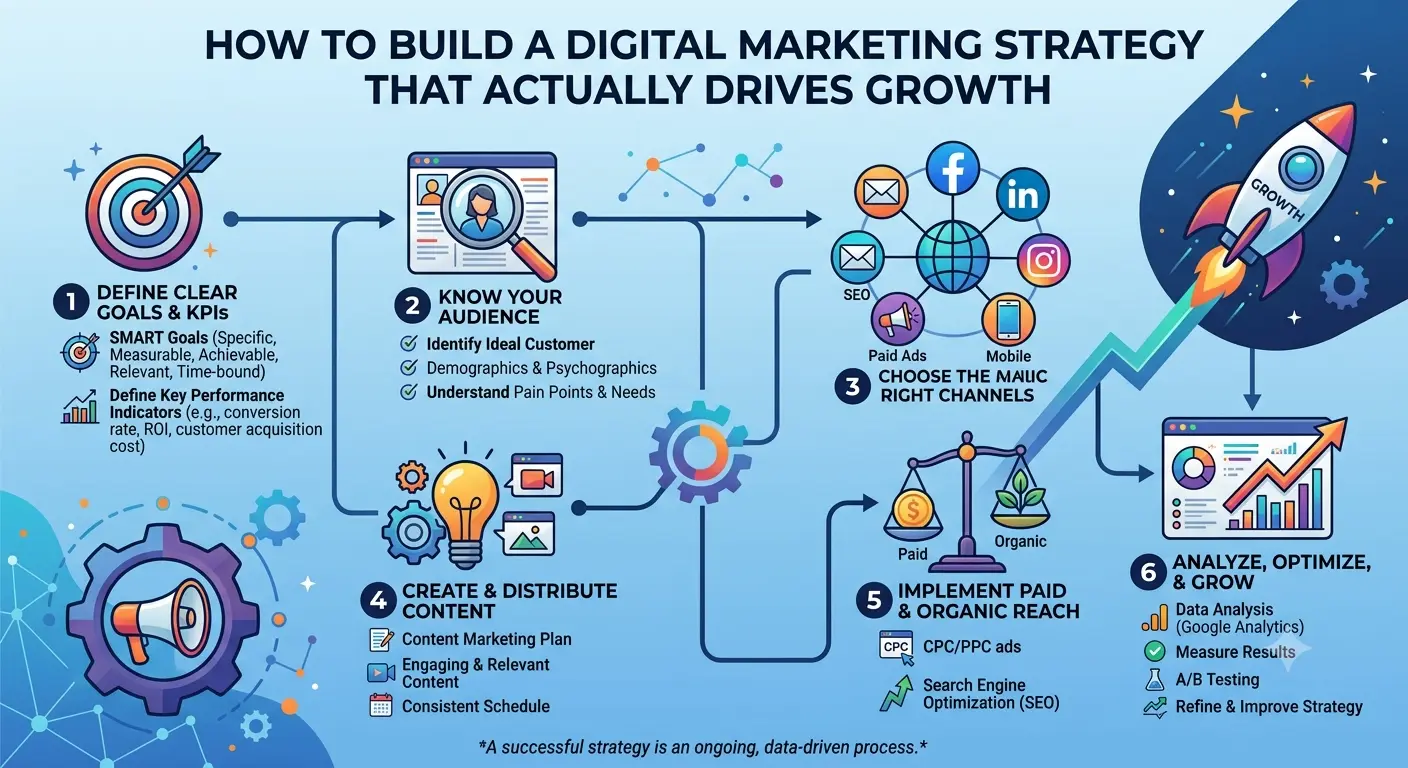
Before selecting marketing channels, define what the business actually wants to achieve.
Different businesses may have completely different priorities. One company may need more qualified leads, while another may want online sales, stronger brand recognition, or better visibility in a competitive market.
Common objectives include:
The goal should be specific enough to measure. Instead of saying “increase website traffic,” a better objective would be to increase relevant organic traffic and generate more enquiries from that traffic.
Good marketing starts with understanding the people who are likely to buy from you.
Research what customers search for, what problems they are trying to solve, what questions they ask before purchasing, and what influences their decisions. This information can shape everything from website content to advertising campaigns.
A useful customer analysis should consider:
This helps businesses avoid creating content simply because competitors are doing it. Your strategy should answer real customer needs, not fill up a content calendar.
Search engines remain an important source of long-term website traffic. A well-planned SEO strategy can help businesses appear when potential customers are actively searching for their products or services.
Businesses working with a Best SEO company Kerala should expect more than keyword placement. Effective SEO involves technical improvements, useful content, internal linking, search intent analysis, local visibility, and continuous performance monitoring.
A practical SEO strategy should include:
SEO usually takes time, but the value comes from building visibility that can continue generating traffic without paying for every individual visit.
Social media can support awareness, engagement, website traffic, and lead generation. However, posting every day does not automatically create business results.
Effective social media marketing services in Kerala should be based on audience behaviour and business objectives. Each platform should have a clear role rather than publishing the same post everywhere.
For example:
The key is consistency with relevance. Ten useful posts are better than thirty posts that nobody remembers five minutes later.
Organic marketing and paid advertising can work together when planned correctly.
SEO and content can build long-term visibility, while PPC advertising services can help businesses reach potential customers more quickly. Paid campaigns are particularly useful for promoting specific offers, generating leads, testing new markets, or targeting high-intent searches.
A balanced approach can involve:
The important part is measuring what each channel contributes rather than judging every activity by the same metric.
Content should have a clear purpose. A potential customer may not be ready to contact a business after reading one article, but useful content can move them closer to making a decision.
Strong content can answer questions such as:
This approach makes digital marketing services for businesses more useful because content becomes part of the customer journey instead of simply being published for search engines.
A digital marketing strategy should never remain unchanged for months. Performance data should influence future decisions.
Track metrics that connect with business goals, such as:
If one campaign produces large amounts of traffic but very few enquiries, more traffic may not be the answer. The problem could be the landing page, offer, targeting, or customer intent.
Good marketing involves testing, learning, and improving. Sometimes the best optimisation is admitting that something is not working.
A successful digital marketing strategy is built around business objectives, customer needs, useful content, appropriate channels, and measurable performance. SEO, social media, PPC, content marketing, and other channels should not operate as isolated activities. They should support the same overall growth plan.
For businesses looking for sustainable online growth, working with a digital marketing company in Kerala can provide a structured approach to planning, implementation, and optimisation. The right strategy will depend on the industry, market, competition, customer behaviour, and available resources.
Trivlogic focuses on connecting digital marketing activities with practical business outcomes. Instead of chasing every new platform or marketing trend, businesses can concentrate on the channels that actually help them reach potential customers and generate meaningful results.