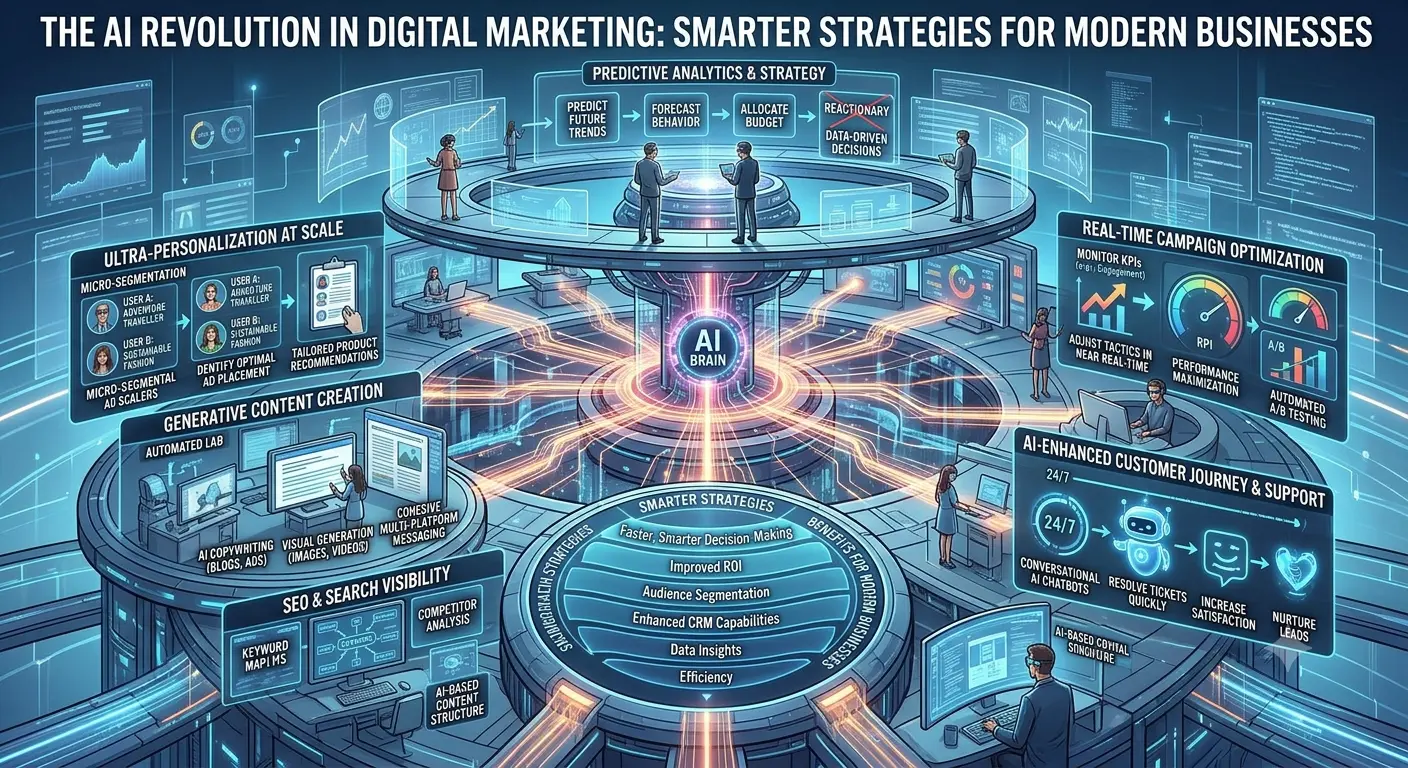
Digital marketing is becoming more data-driven, personalised, and responsive as artificial intelligence changes how businesses plan and manage their online campaigns. From analysing customer behaviour to identifying profitable keywords and improving advertising performance, AI is helping marketing teams make better decisions with less manual effort. Businesses no longer need to depend entirely on historical reports or guesswork to understand what their customers are looking for. They can use AI-powered tools to identify patterns, predict customer interests, and adjust campaigns based on real-time performance.
However, adopting AI does not automatically guarantee better marketing results. The real advantage comes from knowing where to use it, how to interpret its recommendations, and when human judgement is necessary. Businesses working with a digital marketing company in Kerala can explore these opportunities through a combination of intelligent tools, creative planning, and performance analysis.
At Trivlogic, the focus is on connecting technology with practical marketing strategies that support business growth. Whether it is improving search visibility, managing paid campaigns, or developing social media strategies, AI can make digital marketing more efficient when applied with a clear purpose.
Traditional campaign planning often involves analysing previous results, studying competitors, and testing different approaches. AI makes this process faster by processing large amounts of marketing data and identifying patterns that might otherwise take considerable time to discover.
For example, an e-commerce business can use AI to understand which products attract the most attention, what type of customers are more likely to purchase, and which campaigns generate meaningful enquiries. These insights help marketers allocate budgets and resources more effectively.
AI also supports campaign planning through:
For businesses working with an SEO Agency in trivandrum, these capabilities can support better keyword research, content planning, and competitor analysis.
The important point is that AI should support marketing decisions rather than make every decision independently. A campaign still needs a clear objective, a suitable message, and an understanding of the business.
Search behaviour is changing, and businesses need to understand more than just keyword rankings. Search engines are increasingly focused on understanding user intent, content relevance, and the usefulness of information.
AI-powered SEO tools help marketers identify search patterns, discover content opportunities, and analyse competitor websites. Instead of spending hours manually reviewing individual keywords, marketing teams can use these tools to organise information and identify areas that deserve attention.
Some practical applications include:
An effective SEO service in Kerala should combine these insights with website improvements, relevant content, and continuous performance monitoring.
AI-generated content also requires careful attention. Publishing large amounts of automatically generated material without checking its accuracy or usefulness can affect content quality. Businesses should focus on providing original insights, practical information, and clear answers to customer questions.
Paid advertising is another area where AI is making a noticeable difference. Managing multiple campaigns requires regular monitoring of budgets, audience behaviour, conversion rates, and advertising performance.
AI-powered advertising features can analyse campaign data and help identify opportunities to improve results. Automated bidding, audience targeting, and performance recommendations allow marketers to make adjustments based on campaign activity.
For example, a company promoting software development services may receive website visits from different locations and customer segments. AI-supported campaign analysis can help identify which segments generate more enquiries rather than simply attracting clicks.
A professional PPC Agency in trivandrum can use these insights to improve campaign management through:
A PPC marketing agency in trivandrum should not rely entirely on automated recommendations. Some automated campaigns may generate impressive traffic numbers without producing actual business enquiries.
Social media platforms generate enormous amounts of information about customer interests, engagement patterns, and content preferences. AI helps businesses analyse this information and develop content strategies that are more relevant to their audiences.
From identifying popular topics to evaluating campaign engagement, AI-powered tools can reduce the time required for social media planning.
A social media marketing company in kerala can use AI-assisted tools for several activities:
AI can also support visual content development and video editing. However, social media content still needs a recognisable brand voice. Customers are more likely to connect with content that reflects genuine business experiences than with repetitive promotional messages.
Customers expect businesses to understand their requirements and provide relevant information. Showing the same advertisement, email, or website recommendation to every visitor may not produce the best results.
AI makes personalisation more practical by analysing customer interactions and identifying differences in their interests.
For example, an online education platform can recommend courses based on a visitor's browsing history. A real estate company can organise enquiries according to property preferences, location, and budget requirements.
AI can support customer experience through:
Although AI can process information quickly, it does not fully understand every business situation. It may identify a popular keyword without recognising whether that keyword attracts the right customers. It may suggest an advertisement that receives attention but does not communicate the company's actual value.
This is where human expertise becomes important.
Marketing professionals understand business objectives, customer expectations, industry requirements, and brand positioning. They can evaluate AI recommendations and decide whether those suggestions make practical sense.
An effective marketing strategy requires a balance between technology and human involvement:
At Trivlogic, combining technical knowledge, creative thinking, and performance-based marketing activities helps businesses approach digital growth with a clear direction.
Artificial intelligence is changing how businesses approach digital marketing, from campaign planning and search optimization to paid advertising and social media management. Its biggest advantage is the ability to process information quickly, identify useful patterns, and support decisions that would otherwise require considerable manual effort. However, successful marketing still depends on understanding customers, communicating the right message, and choosing strategies that match business objectives.
Businesses should avoid adopting AI simply because it is becoming popular. Instead, they should identify specific areas where automation and intelligent analysis can improve their existing marketing activities. Better keyword research, more relevant advertising, personalised customer communication, and consistent performance monitoring are practical starting points.
For companies planning to strengthen their online presence, working with a digital marketing company in Kerala that understands both modern marketing technology and business requirements can make a meaningful difference. Trivlogic focuses on bringing these elements together through SEO, PPC, social media marketing, and digital strategy development.